The trust layer for physical products.
Heimdall is a zero-trust authentication platform. A smartphone checks a product’s RFID/NFC chip with a cryptographic challenge, so a copied tag fails and a genuine product passes.
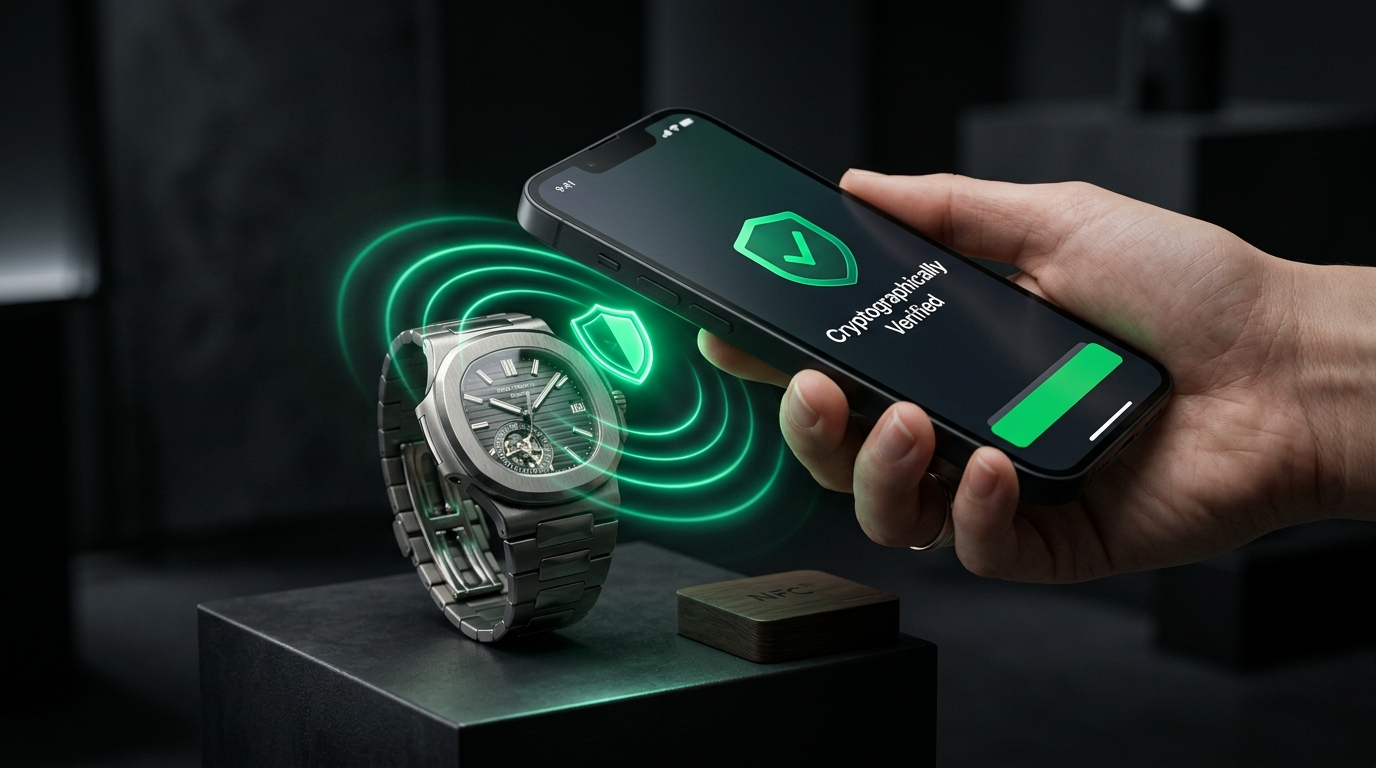
See why a cloned tag fools one system and not the other.
Pick a tag technology, then scan a genuine product and a counterfeit that carries a copy of the tag’s data.
The reader sends a fresh random challenge. Only a chip holding the secret key can answer correctly, and the key never leaves the chip.
Counterfeiting reaches well beyond luxury handbags.
Copied digital identities make counterfeiting worse. Because barcodes and standard tags are static, anyone who reads them once can clone them onto fake products.
Annual Counterfeit Imports into the EU
Estimated at 4.7% of all imports from outside the European Union, eroding brand equity and corporate revenues across member states.
Global Trade in Counterfeit Goods
Equivalent to 2.3% of all global merchandise trade. Cross-border e-commerce and fast parcel shipping have accelerated illicit distribution.
Pharmaceuticals
Counterfeit medicines penetrate supply chains with life-threatening consequences. Static serial numbers and barcodes are routinely cloned.
Fashion & Footwear
Fake products duplicate basic NFC marketing tags, routing unsuspecting buyers to convincing clone verification pages.
Cosmetics & Luxury
Substandard unregulated cosmetics bypass visual packaging checks, harming consumer health and customer confidence.
Existing checks can be copied. A cryptographic handshake can’t.
A tag that only reports an identifier or URL can be cloned. Heimdall forces the product to prove it holds a secret without ever revealing it.
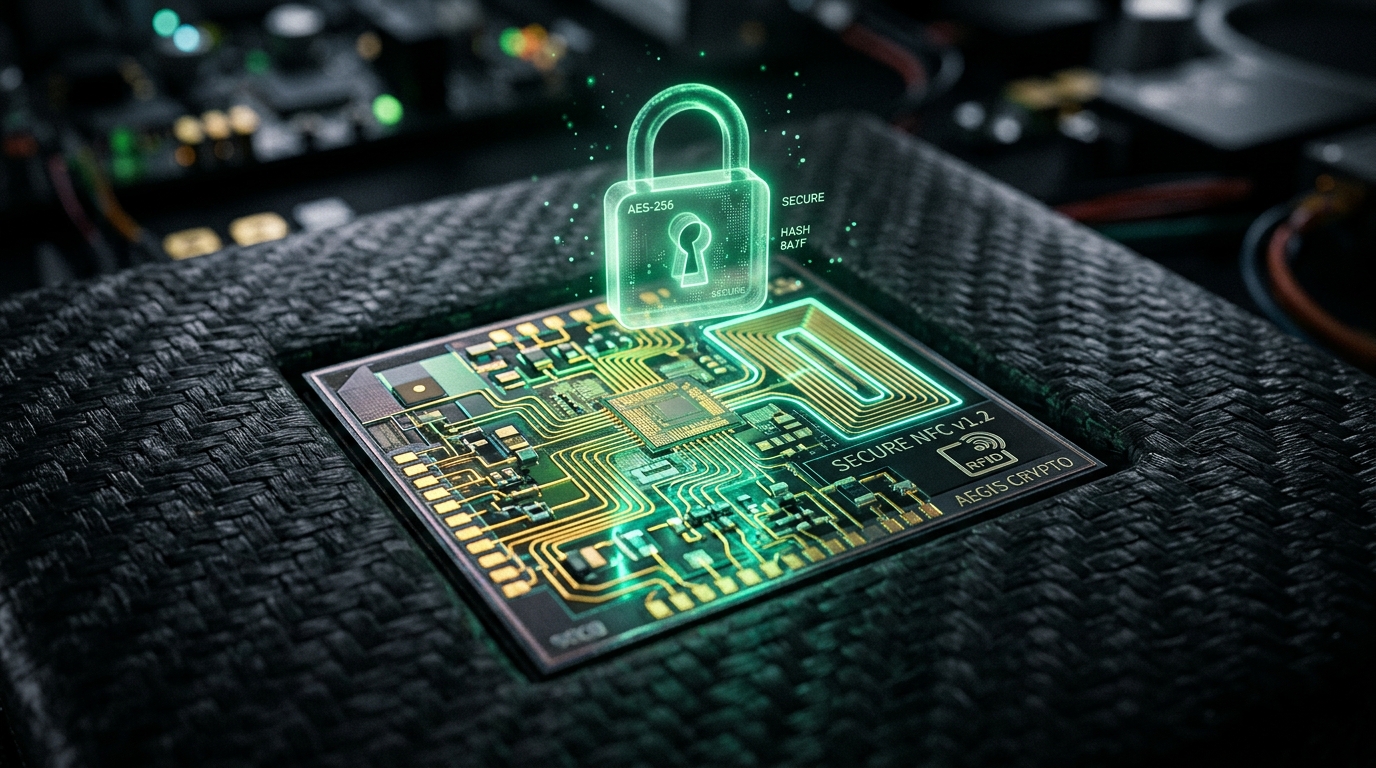
The private key remains sealed within the silicon substrate and never leaves the chip over RF or internet channels.
| Approach | How it works | Security & Weakness |
|---|---|---|
| Holograms | Visual security features applied to package exterior. | Can be reproduced overseas; relies on human inspection. |
| RFID / NFC Web Auth | Tag links the product to an online verification webpage. | Tag identifiers and URLs can be cloned onto fake products. |
| Heimdall Zero-Trust RFID | Mutual authentication cryptographically proves product identity. | Clones fail immediately: challenge requires the unextractable hardware key. |
Random Challenge (RndR)
The reader generates a fresh nonce for every single scan, preventing replay attacks and static recording.
Tag Encryption (RndT)
The physical chip adds its own internal random token and computes an encrypted cryptographic response.
Zero-Trust Verification
Heimdall cloud validates the token against the brand master key. Counterfeits lacking the secret fail instantly.
Products are becoming digitally verifiable.
Smartphones can already read NFC product identities. Qualcomm and industry partners are developing UHF/RAIN RFID support for future phones. The EU is making digital product identity a legal requirement.
Today: Native NFC in Every Pocket
Over 3 billion modern smartphones can already tap and verify cryptographic RFID/NFC chips directly.
Future: RAIN / UHF RFID in Mobile Silicon
Upcoming smartphone platforms will add long-range RFID reading, enabling ambient inventory and store verification.
EU Digital Product Passport (DPP) Timeline
Pharmaceutical authentication requirements begin across the EU.
EU Digital Product Passport (DPP) Regulation formally enacted.
DPP becomes mandatory for the first product categories.
DPP expands across virtually all industrial and consumer product categories.
A focused slice of a growing market.
The authentication market is expanding 10% each year, and RFID/NFC chips represent the fastest-growing technology segment for verifiable brand protection.
Global Counterfeit Problem
Estimated trade in counterfeit goods, representing ~2.3% of all global imports.
Global Authentication Market
Growing at approximately 10% annually under enterprise compliance mandates.
RFID / NFC Dedicated Opportunity
Represents roughly 28% of the total authentication and brand protection market.
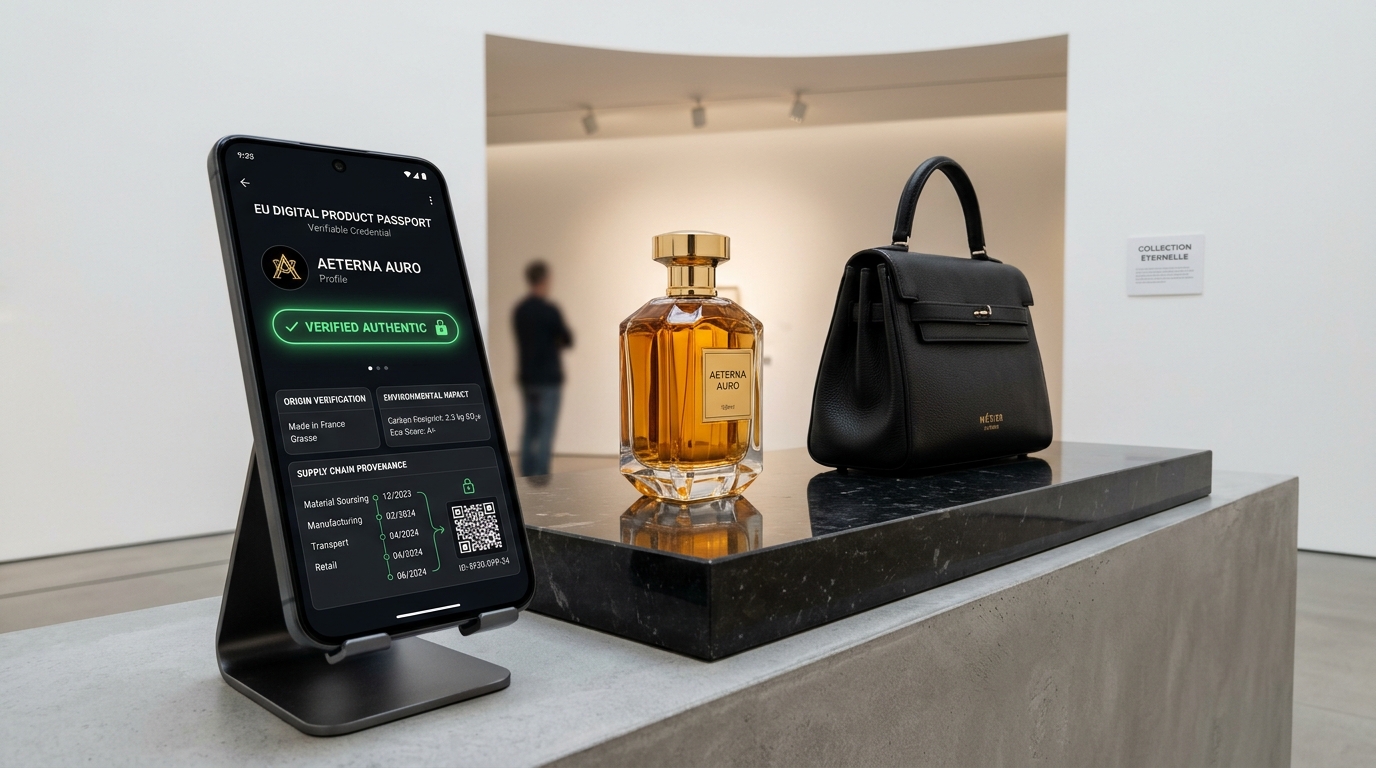
A B2B2C platform: brands pay, everyone verifies.
Brands and manufacturers buy the service. Regulators, retail staff, and end consumers benefit from products they can independently check with any smartphone.
Per-query fees
Each authentication check is a billable micro-service call processed through Heimdall cloud.
SaaS & platform licensing
Brands license the zero-trust key management platform and deployment SDKs across product lines.
Product journey data
Live analytics on scan locations, gray market diversion alerts, and verified supply chain telemetry.
Universal trust across the product lifecycle
Protect margin, eliminate fake copies, and comply with EU DPP regulation.
Verify incoming shipments instantly with handheld or smartphone readers.
Tap with any smartphone to receive cryptographic proof of authenticity.